
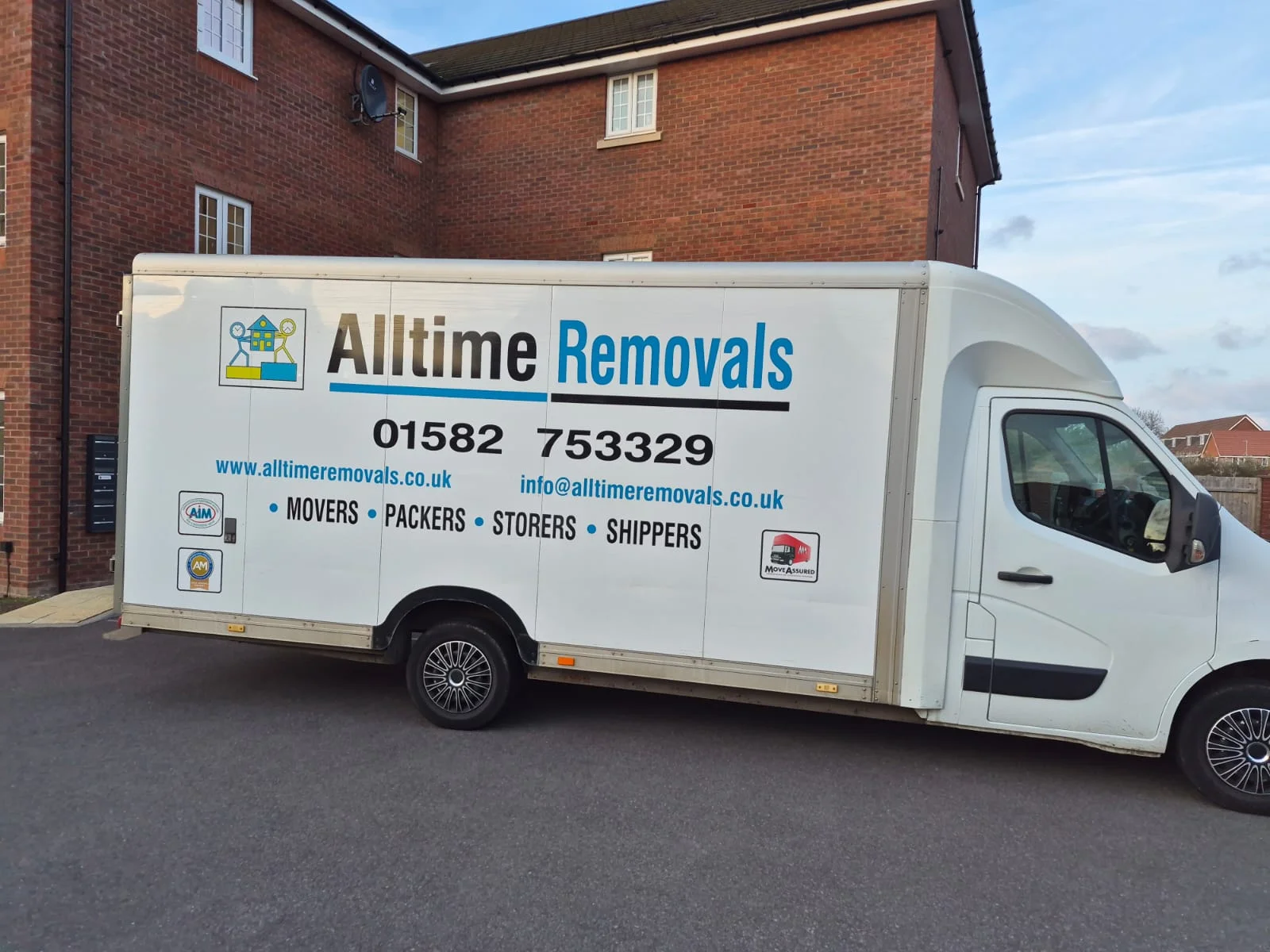
Most people get one number in their head when they plan a move: the removals quote. That figure matters, but it is rarely more than a third of what a house move actually costs. The rest hides in solicitor fees, survey fees, estate agent fees, packing materials, storage, post redirection, and the day-one costs at the new place.
We are a family firm based at Nimbus Park in Houghton Regis, trading since 2002 and rated 4.8 stars on Reallymoving, and our team sees the same thing every week. Customers in Dunstable, Leighton Buzzard, Luton and Milton Keynes book the lorry, then realise three weeks later that the survey, the searches and the new sofa they need on day one have eaten the buffer. None of that has to happen. This guide pulls every 2026 cost out into the open, with real UK figures, so you can budget properly and avoid the late-stage cash crunch that catches most families out.
What Costs Are Involved in Moving House?
A house move in the UK splits into six cost groups:
- Removals — the van, the crew and the mileage
- Packing and materials — boxes, wrapping and labour
- Storage — when there is a gap between completion dates
- Legal fees — conveyancing, searches and the transfer of ownership
- Survey, tax and admin — surveys, estate agent fees, mortgage fees and Stamp Duty
- Day-one costs — the essentials you need the moment you arrive
Get a number against each group and the total stops feeling vague. In 2026 the average cost of moving home in the UK is around £13,000 once Stamp Duty and estate agent fees are included, based on an average house price of roughly £292,000. Strip out Stamp Duty for first-time buyers or lower-priced homes and the figure drops sharply. The point is that “moving costs” is plural, and a written budget beats a guess every time.
For a sister read on how to phase the work itself, our ultimate moving house checklist walks through the eight weeks before the lorry arrives.
Removal Company Costs
The removals quote is the line most people fixate on, and it usually comes in well below the legal and tax costs further down the page. Realistic 2026 removal costs look like this:
- Studio or one-bedroom local move: £250 to £500
- Two-bedroom local move: £400 to £800
- Three-bedroom local move: £600 to £1,200
- Four or five-bedroom local move: £900 to £1,800
Add roughly 30 to 50 percent for moves over 100 miles. Three things move that figure up or down: volume, which is why a proper survey beats an online estimator; distance, priced by mile and by driver hours; and access, which covers parking, lifts, narrow lanes and stairs. A move out of a top-floor flat in central Luton with no resident permit can add a half-day in handling time before a single box is on the lorry.
Watch for two things on a written quote. First, it should be fixed against the inventory the surveyor saw, not capped against an hourly rate that drifts on the day. Second, it should state the goods-in-transit insurance limit in pounds. Our guide on how to compare removal quotes explains what else to check. Our own domestic removals quotes are built from a thirty-minute survey and locked in writing before move day.
Packing, Boxes and Materials
Packing is where the cheapest line on paper turns into the most expensive line in lost time. Doing it yourself with supermarket boxes feels free. It rarely is. A standard three-bed move uses around 60 to 80 boxes, plus large rolls of bubble wrap, several rolls of tape, packing paper for the kitchen, and wardrobe boxes for hanging clothes. Buying that bundle new in 2026 costs roughly £200 to £280.
A professional pack adds labour on top. Our team packs a three-bed house in a single day for a flat fee, materials included, with everything labelled by room. Customers who book the packing service tell us the same thing every time: they wish they had booked it on the first move, not the third. A “fragiles only” pack is a sensible middle option if the budget is tight, where the team handles glass, ceramics and electronics and you do the wardrobes and the linen.
Two costs that surprise people: mattress and sofa covers, which a removals firm will supply at cost or include, and disposing of all that cardboard at the other end. We take ours back to the depot and recycle it, which keeps the new garage clear on day one.
Storage Costs
Storage is the line item nobody plans for, and roughly one move in four ends up needing it. A chain breaks. A completion date slips by a week. The new home has a tenant clearing out and you have already loaded the lorry.
UK storage is priced two ways: self-storage by the square foot per week, which the big national chains use, and removals-firm storage by the cubic foot, which we use at our Houghton Regis depot. For a three-bedroom household, expect £35 to £70 per week with a national self-storage operator in 2026, plus a deposit and an admin fee. Removals-firm storage tends to come in lower for short stays because there is no separate access charge.
Our units are individually alarmed, available long or short term, and accessible 24 hours a day, seven days a week. The right size depends on your inventory, so a surveyor quotes it at the same visit as the move. See our storage page for what is included, or our combined removals and storage guide for how the two work together.
If the gap is only a night or two, a sensible plan is often to keep the load on the lorry overnight and unload the next morning. We do that for local customers regularly, and it is almost always cheaper than a one-week storage minimum.
Legal, Survey and Admin Costs
This is the group that catches most movers off-guard. Conveyancing, searches, surveys, estate agent fees and Stamp Duty are not optional and they are not small.
Conveyancing for a freehold purchase typically runs £500 to £1,150 in solicitor fees in 2026, plus disbursements like local searches and Land Registry fees that often add £700 or more. That brings the all-in legal cost to roughly £1,200 to £1,850. Leasehold adds more for the management-pack work, and selling at the same time roughly doubles the legal bill because two transactions run in parallel.
Estate agent fees apply if you are selling. The average in 2026 is around 1.42 percent including VAT, so on a £292,000 home that is roughly £4,150. This is often the single biggest moving cost for sellers, so factor it in early.
Surveys come in three levels. A RICS Home Survey Level 1 starts around £400 for a small modern home. A Level 2 (homebuyer report) is £400 to £800. A Level 3 (full building survey) for an older property is £600 to £1,500. The Royal Institution of Chartered Surveyors publishes the level definitions in plain English and is worth a read before booking.
Stamp Duty is the biggest single line for many buyers. The 2026 thresholds in England and Northern Ireland, unchanged since April 2025, are 0 percent up to £125,000, 2 percent from £125,001 to £250,000, 5 percent from £250,001 to £925,000, 10 percent from £925,001 to £1.5 million, and 12 percent above that. First-time buyers pay 0 percent up to £300,000 on properties worth up to £500,000. Second homes and additional properties carry a 5 percent surcharge on every band from £40,000. The GOV.UK Stamp Duty calculator gives a confirmed figure in under a minute. Scotland uses LBTT and Wales uses LTT, both with different thresholds.
Admin costs round out the group: mortgage product fees, valuation fees, an EPC certificate if yours is over ten years old, and Royal Mail post redirection. From April 2026, redirection costs £45 for three months, £66.50 for six months, or £95 for twelve months, per adult. None of these are huge on their own, but together they often reach £400 to £800.
How to Budget for a House Move
A working budget is one page. Put removals, packing, storage, legal, survey, estate agent fees, Stamp Duty, mortgage fees, post redirection, day-one costs and a 10 percent buffer in a single column. Put your honest cash position in the next column. The difference is the gap to plug, and you usually have eight to twelve weeks to plug it.
Three rules keep the budget honest:
- Get the removals quote in writing and lock it. That alone removes the largest variable you control.
- Ask the solicitor for a written fee estimate before you instruct, including the disbursements. A reputable firm gives you one without hesitation.
- Run the Stamp Duty figure through the GOV.UK calculator the day the offer is accepted, then again the day before exchange. The rules can change at a Budget and the second check costs nothing.
Day-one costs are the line most underestimated. A new fridge if the seller is taking theirs. A locksmith. Curtains for at least one room. Cleaning supplies, light bulbs, toilet rolls, a kettle on the counter. Set aside £300 to £500 for the new-home essentials kit and you will not be ordering takeaway because the cooker is not plumbed in yet.
How to Avoid Unexpected Moving Costs
Most “unexpected” moving costs are not unexpected at all. They are the same six things, and they are avoidable:
- A removals firm that quotes by email without a survey, then adds hours on the day
- A solicitor who charges per phone call without flagging it upfront
- A storage contract with a one-month minimum when you only need three days
- Parking fines, because nobody booked the suspension on the loading bay
- A second lorry on the day, because the first was sized to a guess
- Losing a chain because the buffer was eaten by a survey downgrade
Six fixes match the six pitfalls. Insist on a survey visit for the removals quote. Ask for a written legal fee estimate with all disbursements listed. Use a removals firm with on-site storage rather than a separate self-storage contract for short gaps. Book parking suspensions for the loading day at both ends, with the council, at least ten working days ahead. Get the inventory right at the survey, not on the morning of the move. And keep the 10 percent buffer untouched until the keys are in your hand.
The single biggest cost-saver in any move is honesty at the survey. Tell us what is in the loft, the garage and the shed. Tell us about the parking, the stairs, the narrow gate. A move planned around the real picture costs less, runs to time, and finishes the same day. You can see everything we offer on our services page.
If you are weighing up a move in Bedfordshire, Hertfordshire, Buckinghamshire or anywhere we cover, ask for a survey visit and a fixed quote. We will sit at your kitchen table for half an hour, list every box and every awkward corner, and come back with a clear price in writing.
Request a tailored removals quote or get in touch with the team to plan the move properly from the survey on.
FAQ’s
The 2026 average for a UK home move is around £13,000 with Stamp Duty and estate agent fees included, based on an average house price of about £292,000. Strip Stamp Duty out for first-time buyers or lower-priced homes and the number drops sharply. Removals, packing, legal fees, estate agent fees and survey costs make up the bulk of the total.
A fully insured British removals firm will quote roughly £600 to £1,200 in 2026 for a three-bedroom local move, rising with distance. Add 30 to 50 percent for moves over 100 miles. Volume, distance and access drive the figure. Always get the quote in writing against an inventory taken at a survey visit, not against an hourly rate.
Doing the packing yourself with bought-in materials, hiring a removals firm for the lorry and labour only, and avoiding any storage contract is the leanest option. It works best for small flats with simple access. For a three-bed family home, a “fragiles only” pack with full-load removals is usually the better balance of cost and risk.
Most home buyers in England and Northern Ireland pay Stamp Duty on any portion of the price above £125,000, with first-time buyers exempt up to £300,000 on properties worth £500,000 or less. These rates have been unchanged since April 2025. The GOV.UK Stamp Duty calculator gives a confirmed figure for your purchase in under a minute. Scotland uses LBTT and Wales uses LTT, with their own thresholds.
Add a 10 percent buffer on top of every other line in the budget and treat it as untouchable until the keys are in your hand. For a typical three-bed move, that is £500 to £1,200 of headroom. The buffer covers parking suspensions, last-minute storage, the day-one essentials kit, and any small slip in the chain.